Homemade Herbal Cough Syrup Recipe
♥ May contain affiliate links or sponsored content. Please see my privacy policy and affiliate disclosure.
This homemade herbal cough syrup is one of my favorite go-to recipes for soothing sore throats, calming coughs, and supporting the body naturally. Made with gentle herbs and raw honey, it’s an easy, comforting alternative to store-bought cough syrups filled with artificial colors and flavors. If you love keeping a well-stocked home apothecary, this herbal cough syrup is a must-have recipe to save.

This homemade herbal cough syrup is a must-have in your home apothecary, especially during the cold and flu season.
Not only does it calm a cough, but it can also soothe a sore throat. It’s made with extremely powerful herbs and is 100% all-natural.
Why Make Your Own Herbal Cough Syrup
I like to make my own cough syrup for several reasons. One is that I often have all the ingredients already on hand, which means I can treat a cough in 20 minutes without having to leave my home.
I realize not everyone will have these ingredients on hand, but as someone who loves to make things from scratch, I have quite a collection of herbs and spices.

Another reason I like making homemade cough syrup is that it’s made with all-natural ingredients.
Many store-bought cough syrups contain artificial colors and flavors, while homemade versions rely on simple, nourishing ingredients you can feel good about using.
In addition, the active ingredients in many over-the-counter cough syrups are synthetic drugs, which may come with unwanted side effects for some people.
And the main reason I choose to use homemade cough syrup is that it works really well. In my opinion, it works better than most store-bought cough syrups.

Herbal Cough Syrup Ingredients
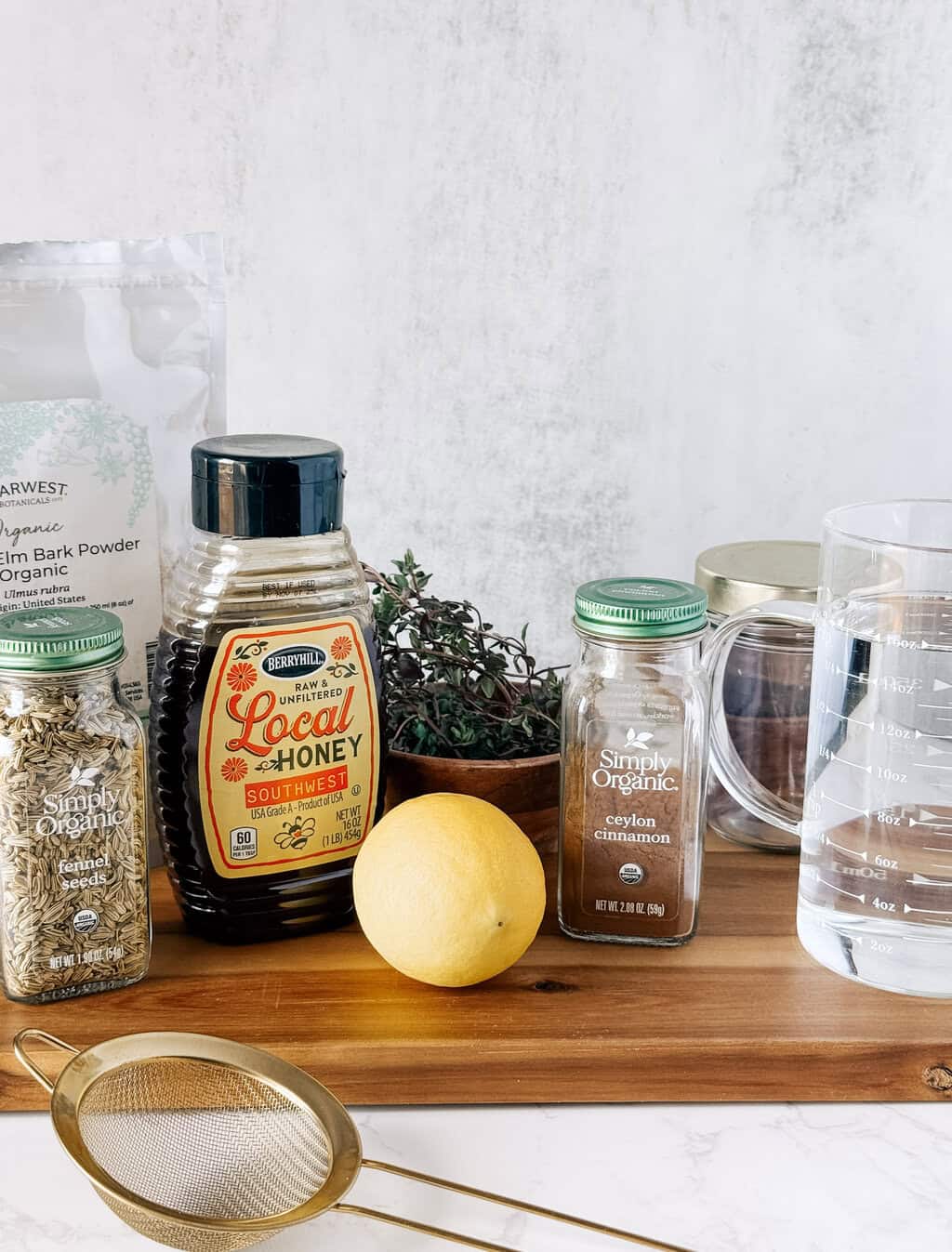
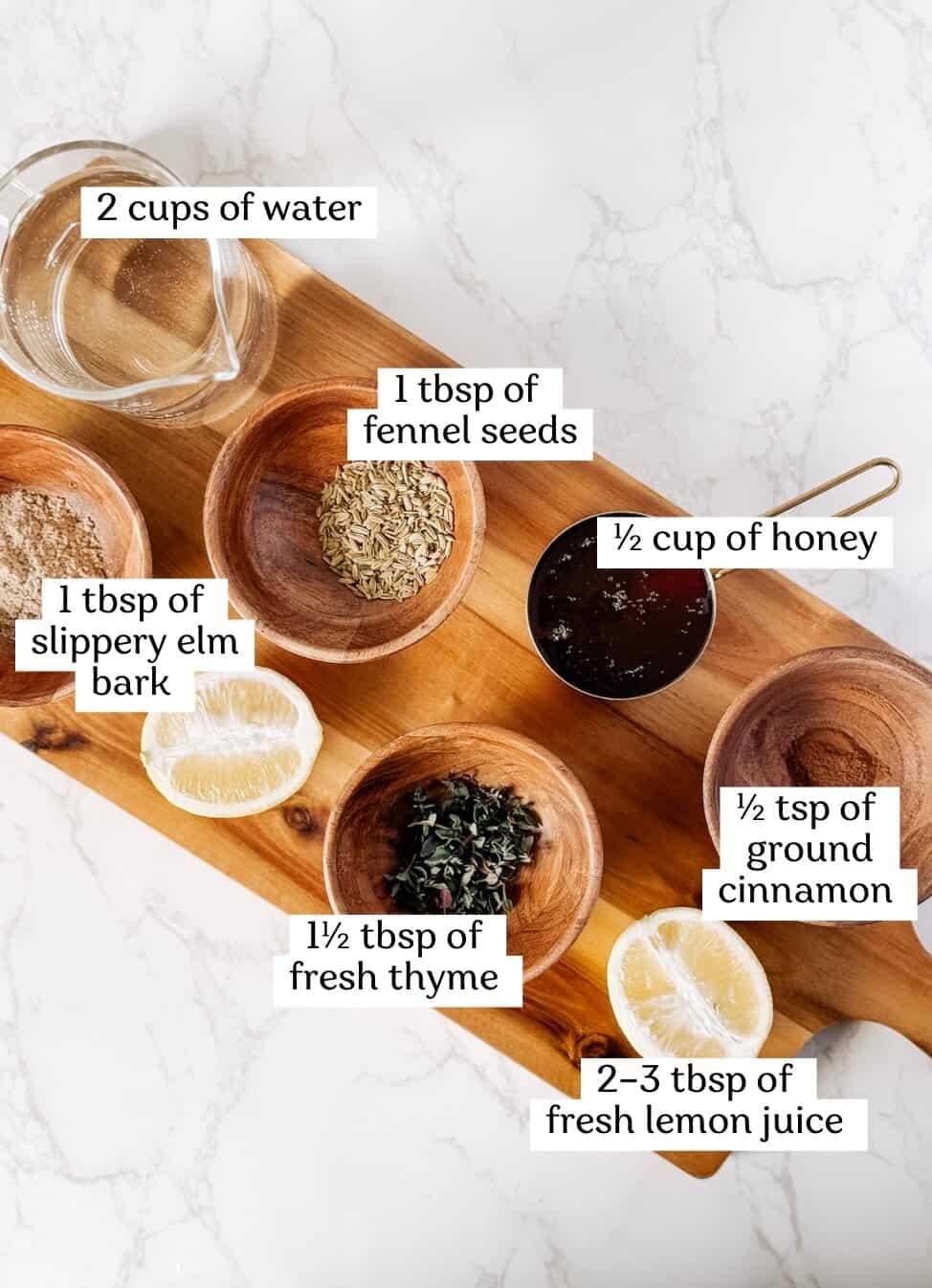
To make this herbal cough syrup, you’ll need the following ingredients and supplies.
- 2 of cups water
- 1 tablespoon of fennel seeds
- 1½ tablespoons of fresh thyme
- 1 tablespoon of slippery elm bark
- 1 small cinnamon stick or ½ teaspoon of ground cinnamon
- ½ cup of raw honey
- 2–3 tablespoons of fresh lemon juice
- mesh strainer
- heat-safe glass measuring cup
- 8-12 ounce glass jar with lid
- small to medium saucepan
Details about each active ingredient are below.
Fennel Seeds
Fennel seeds contain natural oils and mild mucilage that help coat irritated throat tissues, easing scratchiness and discomfort.
Fennel seeds also help loosen and thin mucus, making coughs more productive and easier on the chest.
They also have an antispasmodic effect, which means they can help relax the muscles involved in coughing, which is especially helpful for dry, spasmodic, or nighttime coughs.
Thyme
Thyme helps calm inflammation in the throat, reducing soreness, swelling, and discomfort.
Thyme also helps loosen and thin mucus, making it easier to cough up and clear from the airways, and it relaxes the muscles of the respiratory tract, which can reduce frequent or spasmodic coughing—especially helpful at night.
Slippery Elm Bark
Slippery elm bark contains a large amount of mucilage, a gel-like substance that forms when mixed with water. This creates a protective, slippery coating over irritated throat tissues.
Because it coats the throat and upper airways, slippery elm bark can reduce the urge to cough—especially helpful for dry, tickly, or lingering coughs.
Cinnamon
Cinnamon has anti-inflammatory properties and adds a yummy flavor to the cough syrup.
Honey
Honey soothes sore throats, coats the mucous membranes, and fights bacteria. It also gives this cough syrup a yummy flavor and syrupy consistency.
Lemon
Lemon provides vitamin C and helps cut through mucus.
How to Make Homemade Cough Syrup
To make this homemade cough syrup, you’ll first need to gather all of your ingredients and supplies.